
The Post That Almost Made Me Drop My Phone
I was bored one evening, scrolling social media like everybody else. Then one post stopped my thumb cold.
“The higher your cholesterol, the lower your risk of cancer and death. Everything you’ve been told is a lie.”
I’ve spent my career as an interventional cardiologist. I’ve opened blocked arteries at two in the morning. And here was a stranger telling millions of people that high cholesterol is their friend.
Here’s the twist. The studies behind that claim are real. And the conclusion is still dead wrong.
Wait — the Studies Are Real?
Yes. Researchers really have found that people with low cholesterol were diagnosed with more cancer. That part is true.
But a true fact can still tell a false story. September is National Cholesterol Education Month. So let’s set the record straight, one step at a time.
The Garden Hose in Your Chest
Picture a garden hose. Your arteries are hoses. Your blood is the water. Cholesterol is part of the water — your body actually needs some of it to build cells and hormones.
The trouble is one particular passenger: LDL.
Cath Lab Translation: “LDL” is the type of cholesterol that seeps into the wall of the hose and sticks there. Think of it as the gunk in the water.
Year after year, that gunk builds up. Doctors call the buildup atherosclerosis.
Cath Lab Translation: “Atherosclerosis” is just a slow clog forming inside the hose. A heart attack is the moment the flow finally stops.
So if the gunk is the problem, how did the internet decide that more gunk means less cancer and a longer life? Because somebody mixed up cause and effect.
The Fever and the Infection
A fever doesn’t cause an infection. The infection causes the fever.
The relationship between cancer and cholesterol can work the same way: the disease changes the number, rather than the number causing the disease. A hidden cancer can alter the body’s metabolism—including cholesterol levels—before anyone finds it. So when researchers check the numbers, low cholesterol and cancer show up together. The low number wasn’t the villain. It was the footprint.
Research strongly supports this. In a study of more than 29,000 men, high cholesterol looked “protective” against cancer at first. Then researchers removed the cancers diagnosed in the first nine years — tumors that were likely already growing when the study began. The “protection” vanished completely.
A gene study added another important piece of the puzzle. People with genetically lower cholesterol throughout life did not show an increased risk of cancer.
Meanwhile, the hose keeps telling the truth. In a Danish study of more than 108,000 people, every rise in LDL meant a higher risk of heart attack. No exceptions.
And here’s the hopeful part. When researchers pooled dozens of clinical trials, lowering LDL by about 39 points meant that roughly 1 out of every 5 major heart attacks and strokes simply didn’t happen. That’s not a lie. That’s plumbing.
A Prescription You Can Eat
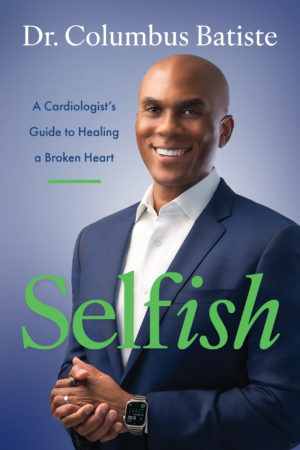
This is where I get excited, because this is the Food pillar of SELFISH in action.
There’s a proven eating pattern called the Portfolio Diet — a “portfolio” of cholesterol-lowering foods working together, the way a portfolio of investments works better than one stock. In the original clinical trial, it lowered LDL by about 29 percent — in the same range as a starter dose of a statin drug — and cut a key inflammation marker by about 30 percent.
You don’t have to overhaul your life tonight. Small steps clean the hose. This week, you might try:
- Swapping one meat meal for beans, lentils, or tofu (plant protein)
- Starting one morning with oatmeal — its sticky fiber grabs cholesterol on the way out
- Trading one processed snack for a small handful of almonds or walnuts
- Cooking with olive oil, or adding avocado in place of butter or cheese
- Looking for foods with added plant sterols, natural compounds that block cholesterol absorption
Even in real-world studies — busy people, no meals provided — folks who stuck with it dropped their LDL by 10 to 15 percent with food alone. Imagine what food plus your doctor’s plan can do together.
Back to That Post
That social media post read the footprint and blamed the foot. Low cholesterol didn’t necessarily cause cancer — in some cases, an underlying cancer may have contributed to the low cholesterol. And high cholesterol is still quietly gunking up the hose.
So no — everything you’ve been told is not a lie. Keep the water flowing. Keep the hose clean. And the next time a bold post stops your thumb, ask the question I ask in the cath lab every day: which came first?
Want more information you can use to transform your health? Join me on YouTube — subscribe at www.youtube.com/@drbatiste. And since cholesterol is only one side of the heart-health story, start with two recent episodes on the other side — blood pressure: “Why Is My Blood Pressure High?” and “The Best Blood Pressure Monitors” — so the next number you check at home, you’ll actually know what to do with.
A note from Dr. Batiste: This blog is for education, not personal medical advice. Never stop or change a medication — including cholesterol medication — without talking to your own doctor first.
References
- Ahn J, et al. Prediagnostic total and HDL cholesterol and risk of cancer. Cancer Epidemiology, Biomarkers & Prevention. 2009. doi:10.1158/1055-9965.EPI-08-1248 — The study of 29,093 men in which high cholesterol appeared “protective” against cancer until early-diagnosed cancers were excluded, revealing reverse causation.
- Trompet S, et al. Apolipoprotein E genotype, plasma cholesterol, and cancer: a Mendelian randomization study. American Journal of Epidemiology. 2009. doi:10.1093/aje/kwp294 — The gene study showing people with lifelong genetically low cholesterol had no increased cancer risk.
- Johannesen CDL, et al. Association between LDL and all-cause and cause-specific mortality in Denmark. BMJ. 2020. doi:10.1136/bmj.m4266 — The Copenhagen study of 108,243 people showing any increase in LDL raised heart attack risk.
- Silverman MG, et al. Association between lowering LDL-C and cardiovascular risk reduction. JAMA. 2016. doi:10.1001/jama.2016.13985 — The meta-analysis showing about a 21–23 percent drop in major vascular events for every ~39 mg/dL of LDL lowering.
- Jenkins DJ, et al. Effects of a dietary portfolio of cholesterol-lowering foods vs lovastatin. JAMA. 2003. doi:10.1001/jama.290.4.502 — The original Portfolio Diet trial: LDL down ~29 percent and the inflammation marker hsCRP down ~30 percent, comparable to a starter statin.
- Jenkins DJ, et al. Effect of a dietary portfolio of cholesterol-lowering foods given at 2 levels of intensity of dietary advice. JAMA. 2011. doi:10.1001/jama.2011.1202 — The real-world trial showing 10–15 percent LDL reductions with dietary advice alone.