

Let’s have a real conversation—man to man, heart to heart.
We often talk about cholesterol, blood pressure, and blood sugar when we talk about men’s health. But there’s something just as dangerous that doesn’t show up on your lab panel: loneliness. It’s a silent force that’s quietly wearing down the health of millions of men.
You might think loneliness is just about feeling sad or isolated, but the truth is, it’s far more serious. According to research, loneliness carries a mortality risk equivalent to smoking 15 cigarettes a day. It’s not just emotional—it’s physical, physiological, and profoundly life-altering.
The Stats Don’t Lie: A Nation of Isolated Men
Let’s start with a trend that should make us all pause: the steady decline in male friendships.
Thirty years ago, over half of American men reported having at least six close friends. Today, only 27% can say the same. Even more troubling, 15% of men admit they have no close friends at all. One in five say they have no one they can truly confide in.
This isn’t just a personal issue—it’s a public health warning light. The data shows that men who are lonely have a 60–70% higher risk of dying early, a 20% greater risk of heart failure, and a 10% higher risk of cancer — even when other factors like lifestyle and income are accounted for.
How Loneliness Shows Up in the Body
So what’s happening under the surface?
When men are lonely, it sets off a chain reaction in the body. Studies have shown that loneliness increases inflammatory proteins, disrupts immune function, and alters hormone levels in ways that increase the risk of heart disease, diabetes, and stroke. Scientists even have a name for it: Conserved Transcriptional Response to Adversity (CTRA), a pattern of genetic activity linked to chronic disease.
It’s your body’s way of sounding the alarm. But without the right tools or support, most men ignore it—until it’s too late.
The Mask of Masculinity
Here’s where it gets deeper.
Many men don’t even realize they’re lonely, because the way we’re taught to be “men” often means we suppress those signals. We’re conditioned to be stoic, self-reliant, and emotionally restrained. Vulnerability? That’s seen as weakness.
But these old definitions of masculinity can become barriers to real connection. When we don’t reach out, we stay isolated. And isolation breeds more than sadness—it breeds sickness. In fact, unmarried, widowed, or divorced men face a 50% higher risk of dying early, particularly from cancer and heart disease.
Numbing the Pain
When connection is absent, many men turn to coping strategies that feel comforting in the moment but do more harm than good.
Excessive alcohol, tobacco use, overeating, and withdrawing into screens or gaming—these behaviors often start as emotional bandages. But over time, they only make the wound of loneliness deeper.
Digital platforms might give the illusion of connection, but scrolling through social feeds can’t replace sitting across from someone who really knows you, hears you, and sees you.
A Better Way Forward: Reclaiming Brotherhood Through SELFISH Living
So how do we change this?
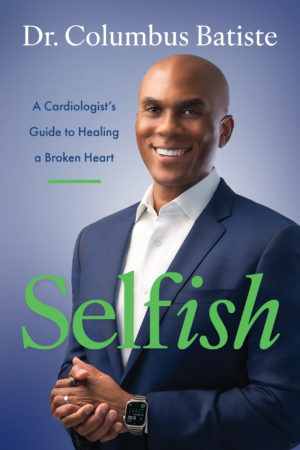
We begin by getting Selfish — in the best way possible. Not self-centered, but Selfish as in Spirituality, Exercise, Love, Food, Intimacy, Sleep, and Humor—the pillars from Selfish: A Cardiologist’s Guide to Healing a Broken Heart. These principles can rebuild not just your health, but your community.
Let’s break down how:
- Spirituality: Whether it’s attending services, joining a men’s group, or practicing daily meditation, spirituality helps men reconnect with purpose—and often with others who share it. It’s a space where emotional walls come down and connection is built on common ground.
- Exercise: The gym. A pickup basketball game. A cycling group. These aren’t just workouts—they’re opportunities for bonding. Moving together builds brotherhood. It turns shared sweat into shared strength.
- Love: Expressed through forgiveness, gratitude, and especially volunteering. Serving others gives men a powerful sense of purpose. Coaching a team, mentoring youth, or feeding the hungry creates bonds forged through service—and those connections are often deeper and more lasting than surface friendships.
- Food: There’s something sacred about sharing a meal. Whether it’s a plant-based potluck, or lunch with a friend, food slows us down and opens space for conversation. It reconnects us to others—and to ourselves.
- Intimacy: Not just romantic, but emotional closeness. It’s the ability to say, “I’m struggling,” and have someone say, “Me too.” Honest conversation—whether over coffee or during a walk—nurtures the kind of intimacy that truly heals.
- Sleep: A well-rested man is a more present man. Sleep restores energy, balances mood, and builds the resilience needed to invest in relationships. Without sleep, connection suffers.
- Humor: Laughter heals. It bridges divides, softens the edges, and allows men to let their guard down. Whether it’s swapping jokes or telling old stories, humor is often the gateway to deeper connection.
Get Selfish to get your health back!
The Final Word
Loneliness isn’t just about being alone. It’s about being unseen. And for many men, it’s been hiding in plain sight—worsening health, draining vitality, and shortening life spans.
But there is another way. It starts by shifting the narrative from silence to connection, from isolation to brotherhood, from “man up” to open up.
So to every man reading this: Get SELFISH.
Reconnect. Serve. Sweat. Laugh. Pray. Eat. And most importantly—show up for each other. Send a message. Make the call. Invite someone to dinner. Don’t wait. Because when we strengthen our relationships, we strengthen our hearts — literally and figuratively.
Your life — and someone else’s — might just depend on it.
References
1) https://www.uclahealth.org/news/article/the-hidden-health-risks-of-loneliness-in-men
2) https://www.nature.com/articles/s41598-018-22963-w
3) https://www.acc.org/About-ACC/Press-Releases/2023/02/01/21/26/Social-Isolation-Loneliness-Increase-Risk-for-Heart-Failure
4) https://www.silvermistrecovery.com/how-loneliness-can-take-a-toll-on-mens-mental-health/
5) https://www.talkspace.com/blog/male-loneliness/
6) https://www.rochesterregional.org/hub/men-loneliness-friends
7) https://neurosciencenews.com/poverty-loneliness-psychology-28998/
8) https://pubmed.ncbi.nlm.nih.gov/29300743/
9) https://www.escardio.org/The-ESC/Press-Office/Press-releases/loneliness-is-bad-for-the-heart
10) https://pmc.ncbi.nlm.nih.gov/articles/PMC4636039/
11) https://www.medicalnewstoday.com/articles/social-isolation-loneliness-linked-to-increased-mortality-risk-research-finds
12) https://medschool.ucla.edu/blog-post/health-effects-of-loneliness
13) https://www.cnn.com/2022/01/12/health/living-alone-men-inflammation-wellness
14) https://pubmed.ncbi.nlm.nih.gov/39929020/
15) https://pmc.ncbi.nlm.nih.gov/articles/PMC3625264/
16) https://www.pnas.org/doi/10.1073/pnas.2306819120
17) https://maleexcel.com/blog/health/loneliness-increase-the-risk-of-heart-failure/