
Hypertension earns its nickname—the “silent killer”—because it can damage your body for years while you feel completely fine. No chest pain. No warning sirens. Most people with high blood pressure don’t “feel” it, even when the numbers are dangerously high.
But here’s what I want you to hear during Heart Health Month: hypertension may be silent symptom-wise, but it is absolutely screaming in outcomes—through rising chronic disease, widening disparities, and lives cut short.
The silence is the trap
High blood pressure is essentially extra force on the artery wall—day after day. Over time, that force injures artery linings, accelerates plaque buildup, and strains the heart. Meanwhile, it quietly scars the kidneys, damages small vessels in the brain, and injures the delicate circulation in the eyes.
That’s why uncontrolled hypertension shows up across multiple chronic disease categories: coronary artery disease, heart failure, stroke, vascular dementia, chronic kidney disease, peripheral artery disease, hypertensive eye disease, metabolic dysfunction—and yes, sexual dysfunction is commonly part of the story too.
The numbers are not quiet
In the United States, high blood pressure was a primary or contributing cause of 664,470 deaths in 2023. Nearly half of U.S. adults have hypertension (48.1%), yet only about 1 in 4 has it controlled (22.5%).
The projections are even louder: the American Heart Association’s 2026 statistics overview highlights that the share of U.S. adults with hypertension is projected to reach 61% by 2050. That’s not a future problem. That’s a future emergency—already forming in the present.
Disparities that should keep us up at night
Hypertension does not hit all communities the same. Non-Hispanic Black adults have the highest prevalence (about 58%), and control rates remain lower across several groups. Even when people engage the healthcare system, treatment patterns differ. In the NIH “All of Us” cohort, Black participants were less likely to receive guideline-recommended therapy compared with White participants.
Yes—hypertension is “silent.” But the inequity around hypertension is loud. And it demands a response that goes beyond clinic walls.
The good news: small drops = big wins
We don’t need perfection. We need progress. A major meta-analysis in The Lancet found that every 10 mm Hg drop in systolic blood pressure is associated with ~20% lower major cardiovascular events and ~13% lower all-cause mortality. Your next 10-point drop isn’t “just a number.” It’s risk coming off the table.
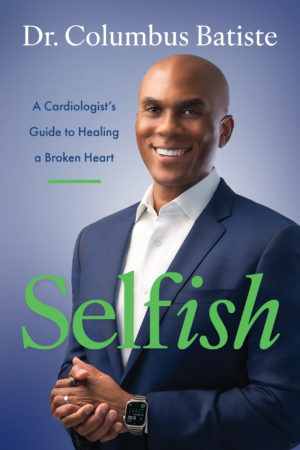
The Selfish solution: daily habits that move the needle
This is the framework I teach—because protecting your heart requires you to protect your life. And here’s the thing: these aren’t vague wellness suggestions. Each pillar comes with real, measurable blood pressure impact.
Spirituality through meditation and mindfulness can lower your numbers by around 9/6 mmHg—roughly a 6% reduction. Ten minutes a day of breath-focused practice or meditation calms the stress response, dialing down that constant “fight-or-flight” state that keeps vessel tension high.
Exercise delivers similar gains—about 8/5 mmHg when you commit to brisk walking 30 minutes a day, five days a week. Start with 10 minutes if that’s where you are. Movement improves artery flexibility and lowers resistance in the vascular system, so your heart doesn’t have to push as hard with every beat.
Love —specifically forgiveness, gratitude, and reflection—produced a 7.6 mmHg systolic drop in a 12-week spirituality and gratitude program. Two minutes a day asking “What am I grateful for?” and “Who do I need to release?” can lower your chronic stress load and quiet the negative rumination that keeps blood pressure elevated and sabotages healthy choices.
Food may be the most powerful pillar of all. A plant-forward, DASH-style eating pattern with sodium reduction can drop systolic pressure by around 11.5 mmHg—an 8% reduction that rivals a first-line medication for some people. Half your plate plants, beans and greens daily, and cut ultra-processed sodium sources. Less sodium plus more potassium and fiber equals less fluid pressure and better vessel function.
Intimacy and positive relationships contribute about 4.8/3.4 mmHg in group support and lifestyle education settings. Choose one “health ally” and make your BP goals a shared weekly check-in. Support improves follow-through on sleep, movement, food, and medications—because change is easier when it’s not lonely.
Sleep extension interventions show drops of around 7.6/4.8 mmHg. Protect a consistent bedtime and aim for 7–8 hours. Treat sleep like treatment—because rest restores nervous system balance and helps normalize nighttime “dipping,” which protects your arteries while you’re unconscious.
Humor rounds out the framework with surprisingly real physiology. Laughter therapy sessions have shown acute reductions of 11.8/6.8 mmHg—an 8% drop. Five minutes a day of intentional laughter (yes, schedule it) reduces stress hormones and temporarily boosts vessel function. Small habit, real results.
Your Heart Health Month challenge
Here’s the challenge: pick ONE pillar—just one—and practice it daily for the next 14 days. Not seven pillars. One. Consistency beats intensity.
Then do the grown-up move: schedule an appointment with your healthcare provider to go over your numbers. Bring your last BP readings (or start home checks this week), your medication list if you have one, and one Selfish habit you’re committing to—so your plan is clear and trackable.
What we’re doing about it: The Pressure Project
I partner with Healthy Heart Nation, 501c(3) and our community initiative—the Pressure Project—brings blood pressure awareness to trusted spaces like churches, barbershops, salons, campuses, and community events. We normalize “know your numbers,” bring screenings into spaces people already trust, and make lifestyle change practical, local, and supported.
Because hypertension may be silent in symptoms… but it’s been screaming for years. Now we listen—and we act.
Learn More:
As we continue Heart Health Month, we’re expanding the conversation beyond cholesterol numbers and blood pressure readings to something just as critical: brain health. Dr. Batiste joins Drs. Ayesha and Dean Sherzai’s podcast episode, “Your Brain On: Vascular Dementia,” where they unpack a truth many people don’t realize—dementia doesn’t always begin with memory loss. For millions, the earliest damage starts silently in the blood vessels, building over decades through high blood pressure, inflammation, poor sleep, chronic stress, and other common risk factors. The encouraging news? Vascular dementia is one of the most preventable and manageable forms of cognitive decline, especially when caught early.
And the conversation doesn’t stop there.
On February 19, Dr. Batiste will be joined by Lily Nedda Dastmalchi for his Healthy Heart Report, Strong Women, Different Hearts: Understanding Risk, Stress, and Prevention Across a Woman’s Lifetime, a timely Heart Health Month discussion focused on women’s cardiovascular health. Together, they’ll explore key topics including menopause and heart risk, GLP-1 therapies, stress, and practical strategies that both women and men can use to protect their hearts and lower long-term risk.