July has arrived, and with it a message we can’t ignore: heat is no longer just uncomfortable. It’s becoming a serious health threat — and your heart is right in the middle of it.
As a cardiologist, I want you to understand something clearly. Hydration is not just about thirst. It’s about circulation. It’s about blood pressure. It’s about how hard your heart has to work when the temperature climbs.
Why Extreme Heat Is a Cardiovascular Issue
The World Meteorological Organization calls extreme heat one of the deadliest weather hazards on the planet, especially when heat and humidity linger. Its June through August 2026 outlook warns of a rapidly developing El Niño pattern — with an 80% likelihood of El Niño conditions during this period — and forecasts above-normal temperatures across nearly every part of the globe. That matters because extreme heat is not just a nuisance. It is a stressor on the cardiovascular system.
What Dehydration Does to Your Heart
When your body heats up, blood flow shifts toward the skin and you begin to sweat to cool down. But sweat carries water and electrolytes out of the body. If you don’t replace what you lose, blood volume drops, your heart beats faster to compensate, the blood becomes more concentrated, and the kidneys start holding onto water.
The CDC warns that heat stress increases demand on the heart and can promote dehydration, blood clots, and electrolyte imbalances that raise cardiovascular risk. Heat and humidity together can also affect blood pressure and drive up cardiovascular hospitalizations.
A healthy heart usually compensates. But for people with heart disease, high blood pressure, diabetes, kidney disease, or those taking diuretics or blood pressure medications, that margin is thin — and dehydration can become dangerous quickly.
What the Science Really Says
Let me be honest, because trust matters more than hype. The evidence is promising but not perfect. Observational research links higher water intake to lower cardiovascular death. One dose-response meta-analysis estimated about a 3% lower risk of cardiovascular death per additional cup of total water a day.
A 25-year NIH-supported ARIC analysis also found that adults with hydration markers pointing toward chronic underhydration in midlife had a meaningfully higher long-term risk of heart failure. In that study, heart failure risk was 39% higher when midlife serum sodium was above 143 mmol/L, even though that level is still within the traditional “normal” range.
But no randomized trial has proven that simply drinking more water prevents heart attacks or strokes. The strongest message from the evidence is this: avoid chronic underhydration, especially during extreme heat.
And to be equally clear — more is not always better. Overloading on water can dangerously dilute your body’s sodium, a condition called hyponatremia. The goal isn’t reckless water loading. It’s steady, intentional hydration.
Your Summer Hydration Plan
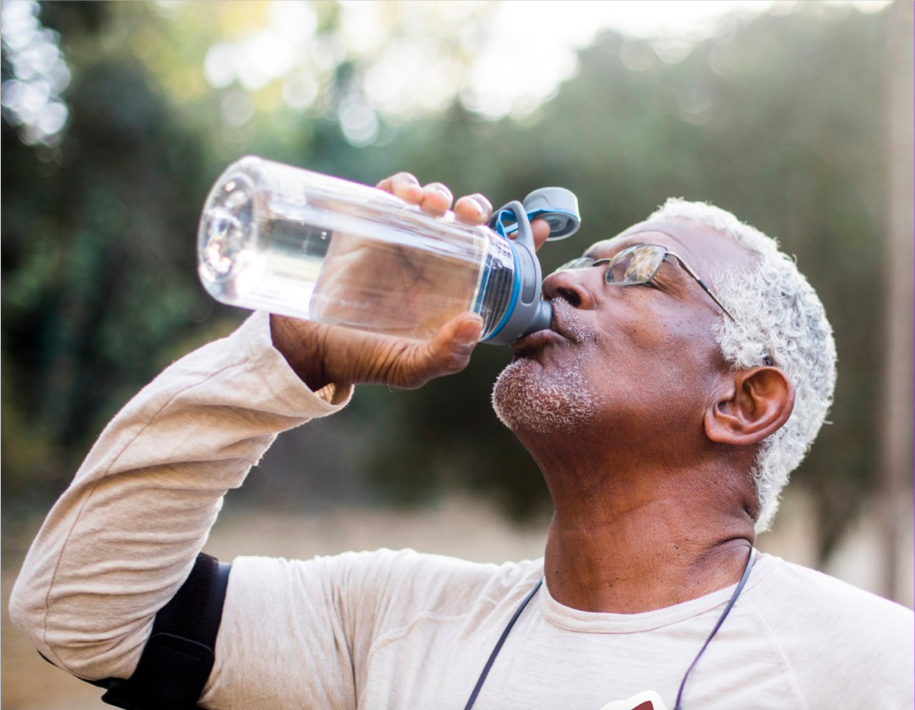
Start early. Don’t wait until you’re thirsty; thirst shows up after you’re already behind. Keep water visible and drink before heading outside.
Watch your urine color. Pale yellow suggests good hydration. Dark yellow is a warning sign in hot weather. WHO recommends steady hydration, carrying a refillable bottle, watching urine color, and going easy on alcohol and caffeine in the heat.
Respect the hottest hours. Move walks and outdoor work to early morning or evening. Wear light clothing, use shade, and take cooling breaks. Water alone cannot overcome dangerous heat.
Add electrolytes when sweating heavily. For routine days, water and water-rich foods are enough. During long stretches of sweating, reach for fruit, beans, vegetables, and soups rather than sugary sports drinks.
Check on someone else. Heat harms quietly. A neighbor or elder may be sitting in a hot room feeling weak, dizzy, or afraid to ask for help. One call can be lifesaving.
Know Your Risk
Older adults, infants, outdoor workers, athletes, and people without air conditioning need extra protection. If you have heart failure, advanced kidney disease, low blood sodium, or you’ve been told to restrict fluids, talk with your clinician about a hydration plan built for you.
Finally, know the red flags. Dizziness, fainting, chest discomfort, confusion, severe weakness, a rapid or pounding heartbeat, or hot skin with worsening symptoms — whether the person is sweating or not — warrant getting cool and seeking medical care right away.
The Bottom Line
This summer, hydration is not a wellness trend. It’s prevention. It’s resilience. It’s one of the simplest ways to support the body as extreme heat places more stress on the heart.
That is why summer hydration tips are not just about comfort — they are part of protecting your heart health during heat waves.
So as we move through July, let’s make a commitment: drink with intention, cool the body, protect the vulnerable, and listen to the warning signs.
Because if we want to go far, we go together.
Annotated References
- World Meteorological Organization — Extreme Heat and Seasonal Climate Outlook. WMO identifies extreme heat as one of the deadliest weather hazards and reported an 80% likelihood of El Niño conditions during June–August 2026, with seasonal updates forecasting above-normal temperatures across nearly all parts of the globe.
- CDC — Heat and Cardiovascular Disease. The CDC explains that heat stress increases cardiovascular demand and can contribute to dehydration, blood clots, electrolyte imbalance, blood pressure changes, and cardiovascular hospitalizations.
- WHO — Tips for Keeping Cool During Extreme Heat. WHO recommends steady hydration, carrying a refillable water bottle, monitoring urine color, and limiting excessive alcohol and caffeine during heat exposure.
- Majdi M, et al. 2021 — Total and Drinking Water Intake and Cardiovascular Mortality. This dose-response meta-analysis found that each additional cup of total daily water intake was associated with about a 3% lower risk of cardiovascular death. This was observational evidence, not proof of causation.
- Dmitrieva NI, et al. 2022 — Serum Sodium and Heart Failure Risk. This ARIC-based analysis found that higher-normal serum sodium in midlife was associated with increased long-term heart failure risk, supporting the importance of avoiding chronic underhydration.
Written by Columbus Batiste, MD — double board-certified interventional cardiologist. This article is educational and not a substitute for individualized medical advice.